
Film Forum
THE FIRST WORLD FESTIVAL OF NEGRO ARTS, FROM THESE ROOTS, and WEALTH OF A NATION
William Greaves · 1966 · U.S. · 40 min
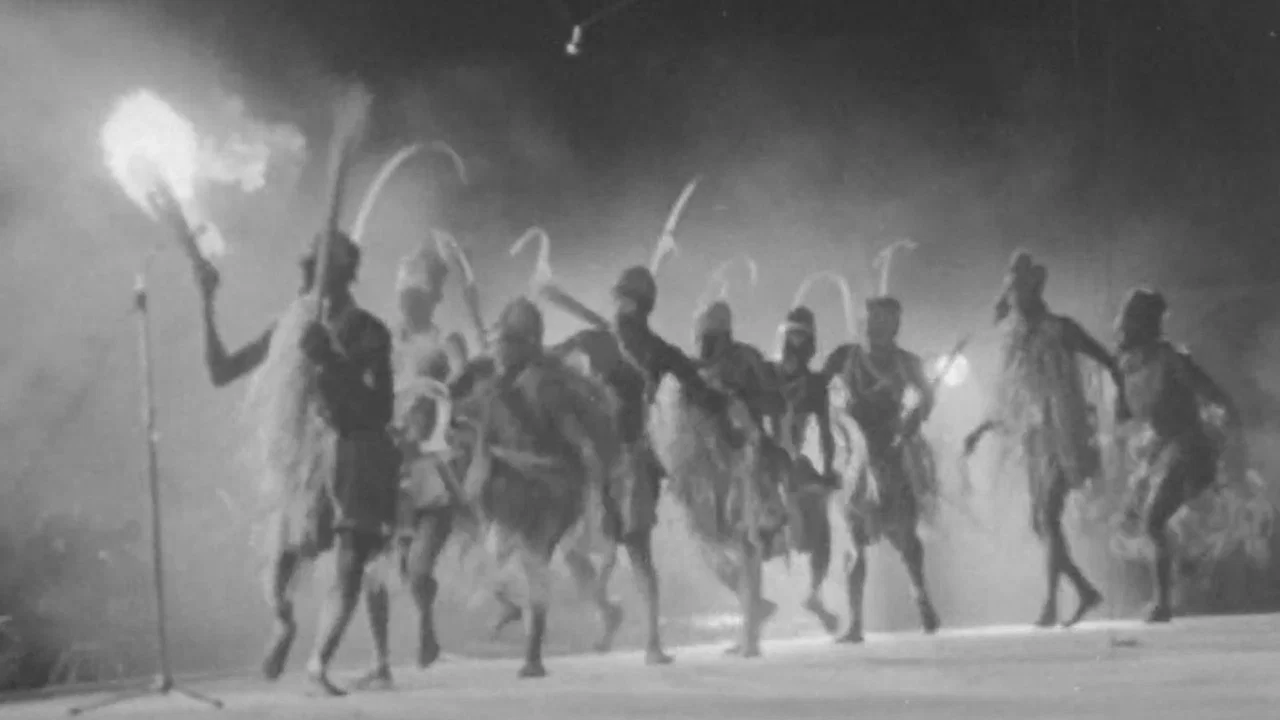
View at Film ForumThe First World Festival of Negro Arts The official documentary film of the festival held in Dakar, Senegal in 1966, in which over 2,000 writers, artists, and performers from Africa and the African Diaspora participated. Featuring Duke Ellington, Langston Hughes, Alvin Ailey, Aimé Césaire, Leopold Senghor, and many other artists, performers, and dignitaries from thirty countries. “You have to realize that the reason why I went into motion pictures was to make films like The First World Festival of Negro Arts. It was the first opportunity I had to make films that expressed a black perspective on reality. Until then I had not had access to financing which would permit that.” – William Greaves 4K restoration by IndieCollect From These Roots “A return to Greaves’s own roots growing up in Harlem. With little stock footage of Harlem and its intellectuals available, Greaves decided to construct a film composed exclusively of photographs. What emerged was a compelling portrait of a community made strong by relative freedom and opportunity. Within the larger context of documentary practice, the film helped to inaugurate a cycle of city neighborhood films that focused on local communities.” – Adam Knee and Charles Musser, William Greaves, Filmmaking as Mission (Columbia University Press, 2021) Wealth of a Nation “Wealth of a Nation started out as A Nation of Dissenters. The United States Information Agency (USIA, who commissioned the film) wanted to do a film showing, in Cold War terms, that America was friendly to dissent, a free society where people could speak their minds. I filmed Madalyn Murray, Saul Alinsky, Lawrence Lipton (he wrote The Holy Barbarians [published in 1959]), and various other people had researched—but when the USIA realized who I was focusing on, they decided they didn’t want that much dissent! Finally, George and McKinney Russell, the wonderful policy guy for the USIA, decided it would be a film dealing with ‘freedom of individual expression.’ Martin Luther King was in the film and a lot of artists.” – William Greaves 4K restoration by IndieCollect
Upcoming Showtimes
Saturday, October 24
- 6:10 PMIntroIntroduced by Vice President of William Greaves Productions Liani Greaves